



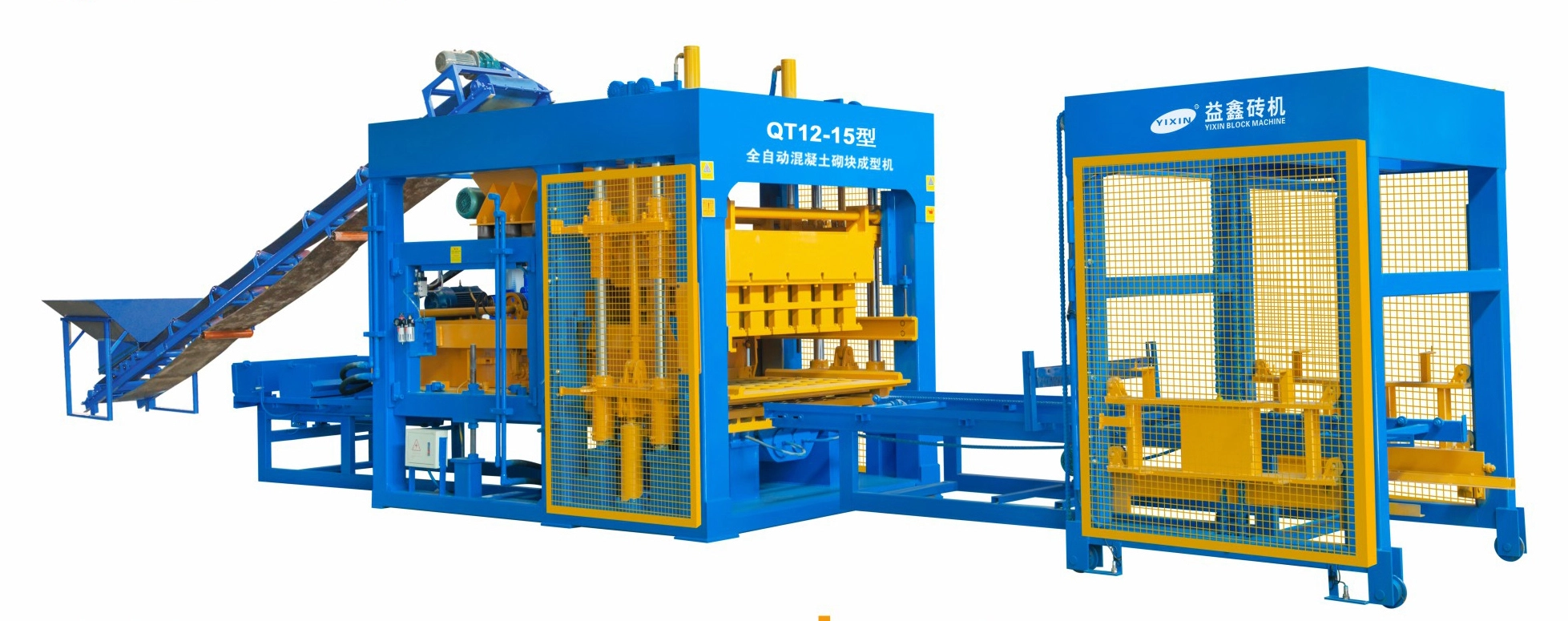
Three Mechanical Structure Adjustment Solutions to Solve Uneven Feeding in Brick Machines
Abstract: Uneven material feeding is a key bottleneck restricting the production quality and efficiency of brick making machines, directly leading to problems such as uneven block density, strength dispersion, abnormal mold wear, and increased energy consumption. This study proposes three targeted adjustment schemes from the perspective of mechanical structure optimization: modification of the double-helix forced homogenizing feeder, upgrading of the vibrating screen-buffered integrated silo, and innovative design of a biomimetic scraper-type material distributor. Through theoretical analysis, simulation, and production line verification, the improvement effect of each scheme on material feeding uniformity was systematically verified. Practice has shown that the three schemes can be implemented individually or in combination, controlling the dispersion coefficient of block compressive strength within 5%, increasing mold life by 40%-50%, and reducing scrap rate by 60%-70%, providing a scalable solution for efficient and low-consumption brick making.
Keywords: Brick making machine; uneven material feeding; mechanical structure; double-helix feeder; vibrating screen; biomimetic scraper
1. Introduction
As the core equipment in building material production, the stability of the brick making machine's feeding system directly affects the molding quality of the blocks. Currently, most brick-making machines suffer from the common problem of uneven material feeding, manifested as stratification, flow interruption, or segregation of raw materials during conveying, distribution, and filling, leading to defects such as density gradients and uneven strength in the blocks. Traditional improvement methods mostly focus on adjusting process parameters (such as vibration frequency and feeding speed), failing to address the fundamental problem at the mechanical structure level. This paper proposes three mechanical structure adjustment schemes for the three key links of the feeding system—conveyance, screening, and distribution—aiming to fundamentally improve the uniformity of material feeding through structural innovation and promote the development of brick-making equipment towards precision and intelligence.
2. Causes and Hazards of Uneven Material Feeding
2.1 Main Causes
Conveying Link: The "central void effect" of the single-screw feeder leads to unstable material flow;
Screening Link: Traditional silos lack grading functions, resulting in the mixing of aggregates of different particle sizes and fluctuations in flowability;
Distribution Link: The scraper structure lacks rigidity and cannot adapt to the rheological characteristics of viscous materials.
2.2 Hazard Manifestations
The compressive strength dispersion coefficient of the blocks exceeds 15%, and the product qualification rate is less than 85%;
The local wear rate difference of the mold reaches 300%, and the average lifespan is shortened by 40%;
The raw material waste rate is as high as 8%-12%, and the energy consumption per ton of product increases by 15%-20%.
3. Three Mechanical Structure Adjustment Schemes
3.1 Double-Helix Forced Homogenizing Feeder Modification
This scheme upgrades the traditional single-helix structure to a symmetrically arranged double-helix system . The double-helix blades adopt a reverse rotation design, generating radial extrusion force while conveying axially, completely eliminating central voids. Key technologies include:
Structural parameter optimization: The helix lead and diameter are designed at a ratio of 1:2.5, and the blade gap is dynamically adjustable;
Intelligent control system: Integrating a humidity sensor and a variable frequency motor, achieving closed-loop control with a flow rate accuracy of ±3%;
Wear-resistant treatment: Laser-coated tungsten carbide coating on the blade surface, extending the lifespan by 3 times.
Implementation Results: Material filling uniformity increased from 65% to 95%, and conveying efficiency increased by 25%.
3.2 Upgraded Integrated Vibrating Screen and Buffer Silo
Addressing the issue of raw material particle size differences, this solution embeds a three-stage stepped vibrating screen system inside the silo. Each screen layer is equipped with an independent ultrasonic transducer (frequency adjustable from 25-40kHz) to achieve dynamic grading and screening. A pressure buffer chamber is installed at the bottom, with real-time pressure stabilization via a PID controller. Key innovations include:
Grading and Screening Module: Three-layer screen aperture gradient design (10mm/5mm/2mm), achieving a grading efficiency of 90%;
Pressure Buffer System: Buffer chamber pressure adjustable range 0.1-0.5MPa, response time <0.1s;
Self-Cleaning Design: The screen is equipped with a back-blowing device to prevent clogging.
Implementation Results: The material feeding speed fluctuation rate was reduced from ±25% to ±5%, making it particularly suitable for construction waste recycled aggregate production lines.
3.3 Innovative Design of Bionic Scraper-Type Material Distributor
To solve the problem of distributing viscous materials, this solution mimics the pulsating mechanism of plant leaves, developing a multi-joint hydraulic scraper system . The scraper adopts a variable curvature adaptive design and is equipped with a six-degree-of-freedom motion mechanism. Key technological breakthroughs include:
Bionic structural design: The scraper surface is optimized based on B-spline curves, achieving a fit greater than 95%;
Intelligent drive system: A hydraulic servo cylinder combined with a fuzzy control algorithm enables three-dimensional flexible material distribution;
Anti-stick coating technology: A polytetrafluoroethylene-silicon carbide composite coating is sprayed onto the scraper surface, reducing the coefficient of friction by 70%.
Implementation results: The uniformity of fly ash block distribution increased from 60% to 85%, and the filling time was shortened by 20%.
4. Benefit Analysis
Comprehensive Benefits:
Quality Improvement: Product qualification rate stabilized at over 98% from 86%;
Cost Reduction: Average annual maintenance cost savings of RMB 150,000 per unit, raw material waste reduced by 8%;
Environmental Contribution: Fly ash content increased to 45%, waste residue utilization rate increased by 30%.
5. Key Points of Project Implementation
5.1 Modular Transformation Process
Diagnosis Phase: Utilize a laser scanner to measure material flow distribution and establish a 3D digital model;
Design Phase: Optimize structural parameters based on ANSYS simulation to generate customized transformation drawings;
Implementation Phase: Rapid transformation within 7-15 days, supporting segmented construction without production line interruption;
Verification Phase: Install an online monitoring system to track key indicators in real time.
5.2 Intelligent Upgrade Path
All solutions reserve IoT interfaces, enabling the expansion of the following functions:
Digital Twin System: Real-time mapping of material supply status and prediction of maintenance cycles;
AI Optimization Algorithm: Automatically adjusts operating parameters based on historical data;
Remote Operation and Maintenance Platform: Enables fault diagnosis and online expert support.
6. Conclusion and Outlook
The three mechanical structure adjustment schemes proposed in this study systematically improve the uniformity of material supply in brick making machines by specifically addressing structural defects in the conveying, screening, and material distribution stages. The solution boasts the following significant features:
Innovation: The double-helix forced homogenization, ultrasonic vibration screening, and biomimetic scraper design are all industry firsts;
Practicality: Modular modification eliminates the need to replace the main unit, resulting in a short investment payback period;
Scalability: It lays the hardware foundation for the intelligent upgrade of brick-making machines.
Future research directions can focus on: ① Developing a machine vision-based real-time material feeding control system; ② Researching the application of nano-coating technology in wear-resistant components; ③ Establishing a multi-disciplinary coupled optimization model of "mechanical-hydraulic-control". Through continuous innovation, we will drive the evolution of brick-making equipment towards a new generation of high-precision, low-energy-consumption, and intelligent technology systems.
WEB: www.yixinblockmachine.cn TEL: 0086-595-2296 3811