



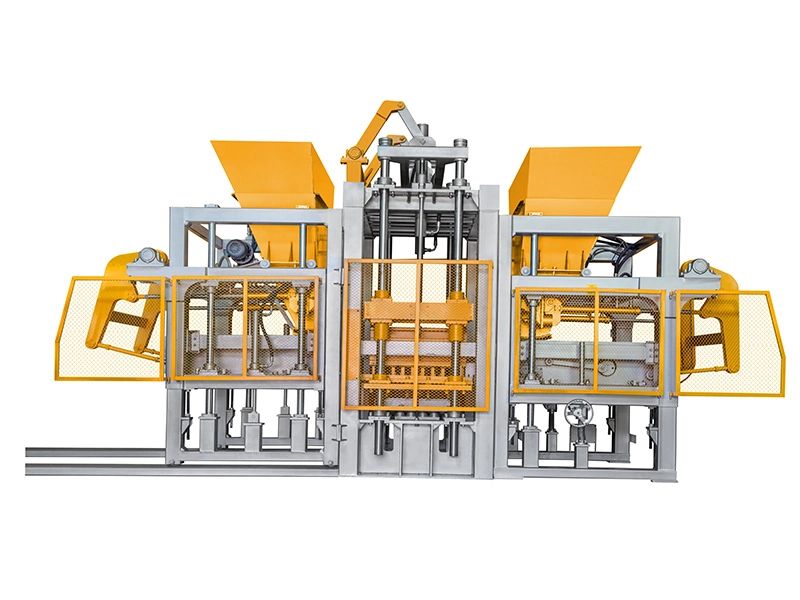
Daily Maintenance of Block Making Machines: 5 Steps to Extend Equipment Lifespan
Abstract: As a core piece of equipment in modern building material production, the operating condition of block-making machines directly affects product quality, production costs, and enterprise economic benefits. This paper aims to explore how systematic and standardized daily maintenance strategies can effectively extend the service life of block-making machines. Based on equipment management theory and engineering practice, the paper focuses on proposing and discussing five key maintenance steps: "Cleaning and Inspection, Lubrication Maintenance, Tightening and Adjustment, System Monitoring, and Recording and Management." By analyzing the specific implementation content and theoretical basis of these five steps, the paper demonstrates their crucial role in preventing equipment failures, reducing wear rates, and enhancing overall efficiency. It provides a practical and effective solution for enterprises to achieve cost reduction, efficiency improvement, and sustainable development.
Keywords: Block-making machine; Daily maintenance; Equipment lifespan; Preventive maintenance; Five steps
1. Introduction
With the rapid development of China's construction industrialization, block products are widely used due to their environmental friendliness and energy efficiency. The block-making machine, as a key piece of equipment on the production line, incurs high acquisition and maintenance costs. In actual production, many enterprises exhibit a tendency to prioritize usage over maintenance, leading to prolonged periods of suboptimal equipment condition. This results in frequent unplanned downtime, with effective service life falling far short of the design lifespan, severely constraining production efficiency and profitability.
The shortening of equipment lifespan primarily stems from gradual wear, corrosion, loosening, and aging—processes that can be actively intervened in and delayed through scientific daily maintenance. The traditional "fix-it-when-it-breaks" reactive maintenance model is no longer suited to the pace of modern production. Therefore, establishing and strictly implementing a standardized, proceduralized daily maintenance system is of paramount importance. The five-step maintenance method proposed in this paper translates complex maintenance engineering principles into clear, daily executable procedures for frontline operators. Its goal is to ensure equipment reliability from the source and achieve the minimization of total lifecycle costs.
2. Five Core Steps for the Daily Maintenance of Block-Making Machines
2.1 Step One: Comprehensive Cleaning and Detailed Inspection
Cleaning is the foundation of maintenance. Its purpose is not only to maintain the equipment's appearance but also to promptly identify potential issues.
Cleaning Tasks: After daily production concludes, specialized tools must be used to remove concrete residue, accumulated dust, and oil stains from the mold, vibration table, pallet feeder, and conveyor belts. Residue accelerates equipment corrosion and affects vibration effectiveness and dimensional accuracy.
Inspection Tasks: During the cleaning process, a "look, listen, question, and check" inspection of the equipment should be conducted simultaneously. Focus on observing whether the mold has cracks or deformations, whether bolts have visible loosening, whether hydraulic pipelines and joints have leaks, and whether wires and cables are damaged or aged. This step constitutes the first line of defense for fault warning.
2.2 Step Two: Systematic Lubrication Maintenance
Statistics indicate that over 50% of mechanical failures originate from poor lubrication. The purpose of lubrication is to form a stable oil film between friction pairs to reduce wear, dissipate heat, and prevent rust.
Key Implementation Points: It is essential to strictly follow the lubrication chart provided by the equipment manufacturer, adhering to the principles of "specific point, specific type, specific quantity, specific timing, and specific personnel." This means applying the specified type of lubricant/oil/grease, in the specified amount, at the specified lubrication points, within the specified time cycles, and by designated personnel. Common lubrication points include bearings, guide rails, chains, gears, etc.
2.3 Step Three: Tightening and Adjustment of Critical Parts
Block-making machines operate under continuous high-frequency vibration, whichis extremely prone to leads to loosening of connectors and displacement of transmission components.
Tightening Tasks: Regularly (e.g., weekly or bi-weekly), tools like torque wrenches should be used to comprehensively inspect and tighten the connection bolts at critical parts such as the frame, mold, and vibration motors, preventing component damage or safety incidents caused by loosening.
Adjustment Tasks: Check the tension of transmission belts or chains. Excessive tightness increases load, while excessive looseness leads to slippage and loss of accuracy. Simultaneously, check the positioning accuracy of actuators like the pallet feeder and stacker, making adjustments as necessary to ensure smooth and precise movement.
2.4 Step Four: Hydraulic and Electrical System Monitoring
The hydraulic and electrical systems are the "circulatory system" and "nervous system" of the block-making machine, respectively, and their stability is crucial.
Hydraulic System: Check daily whether the hydraulic oil level is within the marked range, observe if the oil color is clear and transparent, and periodically sample and test for viscosity and contamination. Listen for abnormal sounds from the pump station and check cylinders, valves, and pipelines for leaks.
Electrical System:Keep the interior of the electrical control cabinet clean, dry, and well-ventilated. Regularly inspect main contactors and relays for contact burning, and ensure wiring terminals are tight to prevent short circuits or overloads due to poor connections.
2.5 Step Five: Standardized Recording and Systematic Management
Maintenance records are key to transitioning from "experience-based management" to "scientific management."
Establish Maintenance Logs: Create an independent "health file" for each piece of equipment, detailing daily cleaning, lubrication, inspection, tightening, and all abnormal conditions. Record content should include time, operator, problems discovered, and actions taken.
Data-Driven Decision Making:By analyzing maintenance record data, equipment wear patterns can be summarized, replacement cycles for wearable parts can be predicted, enabling more forward-looking predictive maintenance and providing data support for planning major overhauls.
3. Benefit Analysis of the Five-Step Maintenance Method for Extending Equipment Lifespan
Implementing the aforementioned five-step maintenance method can significantly extend equipment lifespan across multiple dimensions:
Reduce Failure Rate: Through preventive maintenance, potential faults are eliminated in their early stages, greatly reducing unplanned downtime.
Delay Performance Degradation: Continuous cleaning, lubrication, and adjustment effectively control the rates of wear, corrosion, and aging, allowing the equipment to maintain over 90% of its new-machine condition for extended periods.
Enhance Overall Efficiency: Increased equipment stability directly leads to improvements in production efficiency and product qualification rates.
Control Lifecycle Costs: Although daily maintenance requires investment in manpower and material costs, compared to the high expenses of major repairs and downtime losses, its return on investment is extremely high, effectively reducing the total lifecycle cost of the equipment.
4. Conclusion
In summary, the long-term stable operation of a block-making machine is not accidental but stems from rigorous, scientific daily maintenance management. The five steps expounded in this paper—"Cleaning and Inspection, Lubrication Maintenance, Tightening and Adjustment, System Monitoring, Recording and Management"—constitute a complete, closed-loop equipment maintenance system. It emphasizes physical maintenance of the equipment's hardware state and also encompasses the concept of data-driven management. If enterprises can implement it as a mandatory system and strengthen training for operators and maintenance personnel, they will undoubtedly maximize equipment potential, significantly extend its service life, and thereby secure a sustained competitive advantage in the fierce market competition.
TEL:0086-585-2296 3811 WEB: www.yixinblockmachine.cn